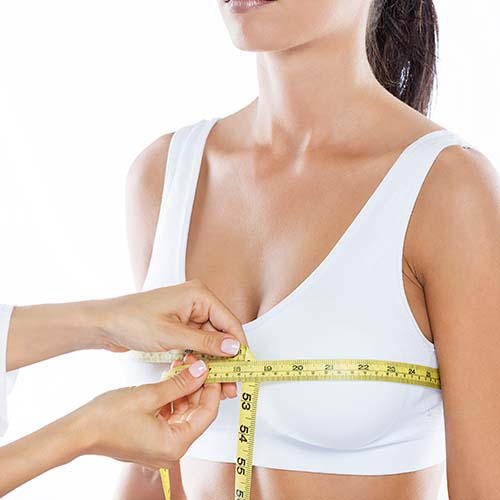
Among cosmetic breast surgeries, this procedure is fundamentally similar to a breast lift. The only difference from breast reduction surgery (reduction mammaplasty) is that this procedure involves removing some of the glands and fat within the breast, along with some skin. This both reduces the size of the breast and improves its shape.
Breast Aesthetics and Breast Reduction Surgery
I’ll reiterate the same points I made about breast lift surgery during my discussion of breast reduction surgery (reduction mammaplasty). Look at your breasts in the mirror. If your nipples are above your breast crease, everything is fine. If they’re down to this line, you may have mild breast sagging; if they’re below this line, you may have severe breast sagging. Nipples that point downward, in particular, indicate the severity of the condition.
There are also some health problems caused by excessively large breasts. For example, almost all of these people experience severe back pain and spinal problems. Hang a 4-5 kg weight around your neck and stand with it for a few minutes, and you’ll understand why. Rashes often appear under large breasts. These rashes can even develop into open sores. The psychological problems caused by excessively large breasts are often overlooked. Breasts that grow excessively during puberty (gigantomastia) can cause adjustment problems in patients. Furthermore, the larger the breast, the higher the risk of breast cancer.
Why Do Breasts Sag?
There are many possible reasons for this. Aging-related hormonal changes can lead to a decrease in breast tissue. This can cause the breasts to hollow out and sag. Breastfeeding mothers are also more prone to sagging. When the breasts are filled with milk, they enlarge and then empty with breastfeeding. This process occurs repeatedly, causing the breasts to naturally sag. Additionally, gravity pulls the breasts downward, causing them to sag. In some cases, sagging begins at a very young age and is entirely due to congenital weakness of the ligaments that support the breasts.
Are There Non-Surgical Solutions?
Unfortunately, there’s no known method yet to correct sagging breasts. Don’t assume that breasts sag due to weak chest muscles and that exercise will lift them. Anatomically, there’s no connection between chest muscles and breast sagging. Exercise can improve your body in many ways, but a breast lift isn’t one of them.
Surgery: Incisions and Scars: A breast lift is actually a procedure that, when performed well, produces very good results. It’s possible to reshape the breast, completely eliminate sagging, and simultaneously enlarge or reduce the size of the breast. However, the cost of all this is the scarring left on the breast. No surgical technique is yet known that can achieve a scar-free breast lift. The techniques used leave a scar around the nipple, where it meets the skin, and extending downwards under the breast. In traditional techniques, this scar extends under the breast and into the crease below. Newer techniques may omit this incision. Generally, the more saggy the breast, the longer the scar will be.
Who Should Have This Surgery?
In reality, the surgery can be seen as transforming one aesthetic problem (sagging) into another (scarring). Therefore, this surgery may not be suitable for everyone. If your breasts are moderately saggy or you think you’ll be seriously bothered by the scars, don’t undergo this surgery. However, if you have severely sagging breasts and think nothing could be worse, this surgery is suitable for you. At the end of the surgery, you’ll have firm, shapely breasts, and the size you desire.
The degree of scarring is a very personal matter. My observation is that my patients with sagging breasts don’t seem to mind these scars as much as I’d hoped. Because I’ve chosen this surgery, I haven’t had a patient say they were unhappy with their scars. However, it’s important to remember that this surgery leaves more scars than other procedures, and the extent to which these scars will be visible will depend, in part, on the patient’s recovery factors.
Common Myths: Larger breasts produce more milk. This association isn’t correct. Milk production is dependent on hormonal influences, and while an A-cup mother can easily breastfeed twins, a D-cup mother may not produce any milk at all. Large breasts have an increased risk of breast cancer due to the presence of more mammary glands. This is also untrue. Anyone with breasts can develop breast cancer. The likelihood depends on factors such as family history, pregnancies, and medication use.
WhatsApp us
We use cookies to ensure we give you the best experience on our website. If you continue to use this site we'll assume you're happy with this.