Scar Revision

Op. Dr. Jale Özdemir Yara İzi Tedavisi

INDEX

Scar Revision Surgery

Surgical scar revision may be necessary for deep and large scars. This procedure involves surgically removing the scarred area and carefully reattaching the skin.

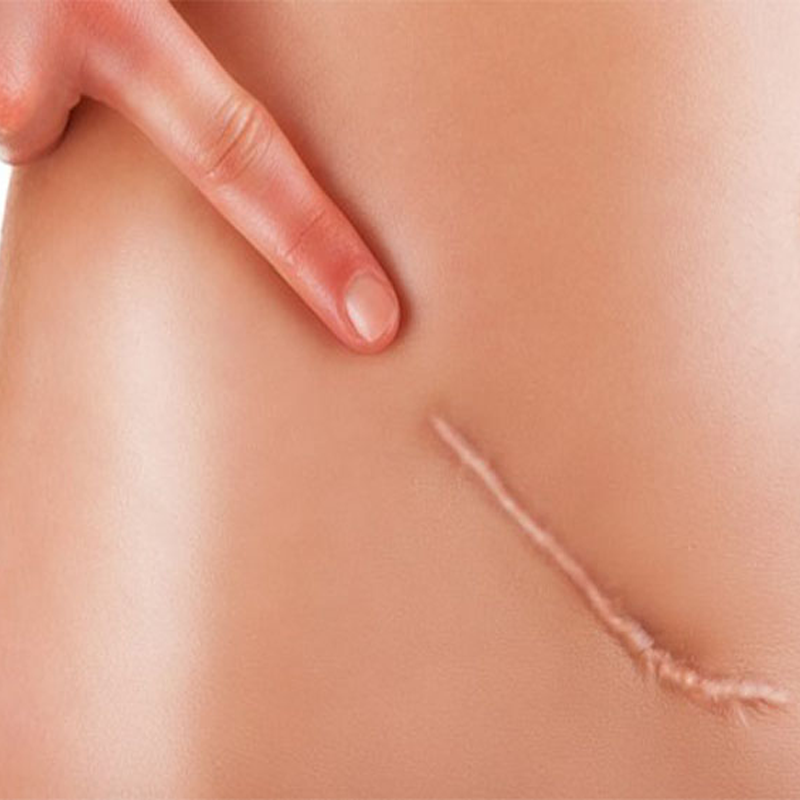
The skin is an organ capable of repairing itself after injury. However, in some cases, permanent scars can remain after the healing process is complete. A scar is a fibrous tissue formation that develops as part of the body’s healing process following cuts, burns, surgery, acne, or traumatic injuries. When the skin is damaged, the body produces a protein called collagen to initiate the repair process. While collagen facilitates wound healing, it can sometimes form differently than normal skin tissue, leaving permanent scars.

What is a Scar?

It’s the result of the body’s own healing process following damage or trauma to the skin. When the skin is injured, the body produces fibrous connective tissue (collagen) to initiate the healing process. Collagen helps close the wound and reduce the risk of infection, while also causing the skin to repair itself differently than its normal structure. After healing is complete, a scar may remain on the skin’s surface, which can be noticeable or subtle. Scars can form in different ways depending on the type of injury, the skin’s healing process, and individual factors. Scars are less noticeable in minor and superficial injuries. Scar tissue can be more noticeable in cases such as deep cuts, burns, or surgical scars. Age, genetics, skin type, and post-injury care are also important factors in determining how a scar will heal.

Types of Scars

Scar formation in the body can vary depending on the amount and distribution of collagen production. During the normal wound healing process, the skin attempts to repair the damaged area with new skin cells. However, sometimes the body can produce excessive collagen production, creating raised scars such as hypertrophic scars or keloids. Conversely, insufficient collagen production can result in the development of sunken and depressed scar tissue (atrophic scars). The types of scars are as follows:

  • Normal scar:  As the wound heals, it becomes a smooth, skin-like scar. Over time, it may lighten and become difficult to detect.
  • Atrophic scars:  These are sunken or indented scars. They are particularly visible after acne scars, chickenpox scars, or surgical procedures. They occur when there is insufficient collagen production under the skin.
  • Hypertrophic scar:  As the wound heals, a noticeable, hard, and raised tissue forms on the skin’s surface. Because collagen production is higher than normal, the scar tissue can expand, creating a red or purplish appearance on the skin.
  • Keloid scars:  Similar to hypertrophic scars, they form due to excessive collagen production, but they grow more aggressively, extending beyond the wound boundaries. They are more common in individuals with darker skin tones and those with a genetic predisposition.
  • Contracture scars:  These scars occur as a result of burn wounds or major skin damage. The skin can tighten, causing limited movement. When they occur in joints, the neck, or large muscle groups, they can lead to loss of movement.
 

How Are Scars Treated?

Treatment methods may vary depending on the type, size, depth of the scar, and the individual’s skin type. While scars cannot be completely eliminated, their appearance can be significantly reduced with modern medical and aesthetic treatment methods, resulting in smoother skin. Scar treatment requires different approaches depending on the type of scar. Specific treatment methods are applied for different types of scars, including atrophic scars (sunken scars), hypertrophic scars (raised scars), keloid scars, and contracture scars. The methods used for scar treatment are as follows:

  • Laser Treatment: This  treatment lightens scars and smooths out scar tissue, giving the skin a smoother appearance. Different methods, such as fractional laser, CO2 laser, and pulsed-dye laser, can be used depending on the type of scar.
  • Microneedling: Microneedling  is based on the principle of creating micro-wounds in the skin using fine needles. This process stimulates collagen production, resulting in smoother scars. It is a highly effective treatment, particularly for acne scars and atrophic scars (sunken scars).
  • Dermabrasion and Chemical Peels:  Dermabrasion is a treatment method that mechanically exfoliates scarred skin and renews it.  Chemical peels  , on the other hand, help regenerate the scarred skin layer by applying exfoliating chemical solutions.
  • Corticosteroid Injections:  Used specifically for hypertrophic scars and keloids, corticosteroid injections help shrink the scar and reduce swelling.
  • PRP (Platelet-Rich Plasma) Treatment:  This treatment involves injecting growth factors extracted from the patient’s own blood into the scar. It reduces the appearance of scars by promoting skin cell regeneration. Its effectiveness is enhanced when combined with microneedling and laser therapy.
  • Scar Revision Surgery : Deep and large scars may require surgical scar revision. This procedure involves surgically removing the scarred area and carefully reattaching the skin.
  • Silicone Sheeting and Compression Therapy:  Silicone sheeting is applied by applying silicone-based patches to the scar. Silicone can help maintain the skin’s moisture balance, preventing scar hardening and enlargement.